
The Multidisciplinary Standard
The Multidisciplinary Standard
The Future of Creative Education in Sri Lanka
The Future of Creative Education in Sri Lanka

Why a New Standard Is Necessary
Creative industries have transformed.
Technology has reshaped production systems.
Artificial intelligence is influencing Creative workflows.
Global markets demand commercial awareness alongside Creative skill.
Collaboration now happens across disciplines, platforms, and borders.
Yet much of traditional Creative education remains siloed.
Design is separated from technology.
Creativity is disconnected from business.
Industry exposure is often secondary rather than foundational.
This structural gap between education and industry reality requires more than incremental change.
It requires a new standard.
Why a New Standard Is Necessary
- Creative industries have transformed.
- Technology has reshaped production systems.
- Artificial intelligence is influencing Creative workflows.
- Global markets demand commercial awareness alongside Creative skill.
- Collaboration now happens across disciplines, platforms, and borders.
- Yet much of traditional Creative education remains siloed.
- Design is separated from technology.
- Creativity is disconnected from business.
- Industry exposure is often secondary rather than foundational.
- This structural gap between education and industry reality requires more than incremental change.
- It requires a new standard.
Defining the Multidisciplinary Standard
At AMDT School of Creativity, the Multidisciplinary Standard is not a marketing phrase.
It is a structured academic philosophy that integrates:
- Creativity as foundational thinking
- Technology as embedded capability
- Business as strategic intelligence
- Industry as contextual alignment
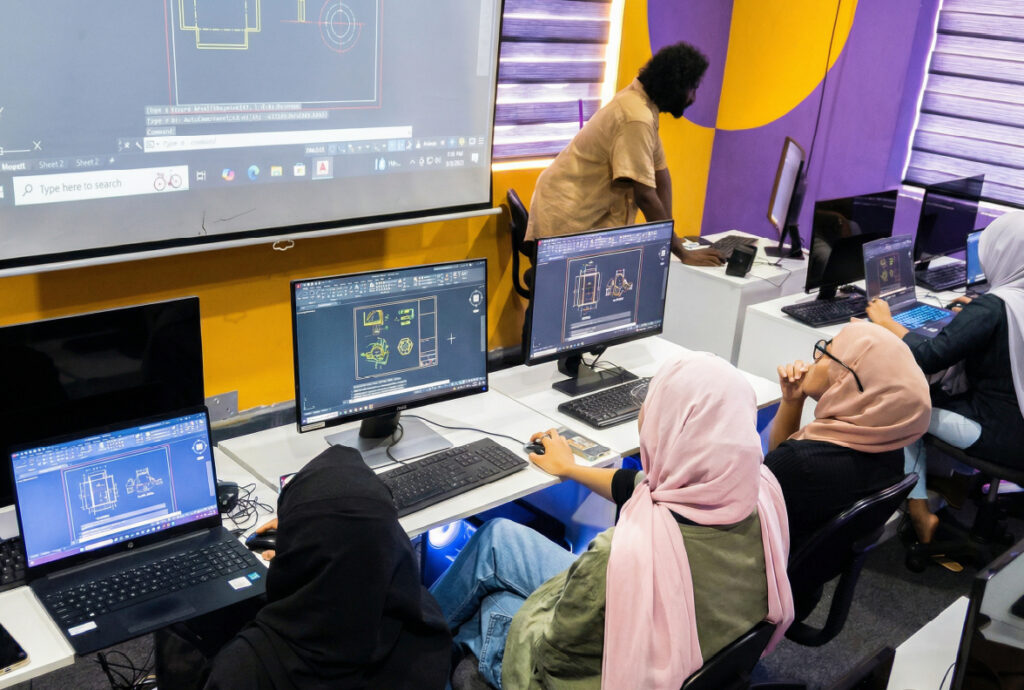
This integration is engineered within curriculum design, project frameworks, assessment systems, and learning outcomes.
Students are not trained within isolated disciplines.
They are developed within an interconnected ecosystem that mirrors how the real world operates.
Defining the Multidisciplinary Standard
At AMDT School of Creativity, the Multidisciplinary Standard is not a marketing phrase.
It is a structured academic philosophy that integrates:
- Creativity as foundational thinking
- Technology as embedded capability
- Business as strategic intelligence
- Industry as contextual alignment
This integration is engineered within curriculum design, project frameworks, assessment systems, and learning outcomes.
Students are not trained within isolated disciplines.
They are developed within an interconnected ecosystem that mirrors how the real world operates.
The Multidisciplinary Framework
AMDT was built on a few simple beliefs—still visible in how we teach and how our students graduate.
Creative Foundation
Development of visual literacy, conceptual depth, experimentation, storytelling, and independent Creative voice.
Technological Capability
Integration of digital tools, production systems, emerging technologies, and AI-enabled workflows within Creative practice.
Commercial Intelligence
Understanding audiences, brand positioning, entrepreneurship, project management, and market realities.
Industry & Global Alignment
Exposure to real-world briefs, collaborative environments, professional standards, and internationally aligned academic structures.
These dimensions do not operate sequentially.
They operate simultaneously — reinforcing one another throughout the learning journey.
Creative Foundation
Development of visual literacy, conceptual depth, experimentation, storytelling, and independent Creative voice.
Technological Capability
Integration of digital tools, production systems, emerging technologies, and AI-enabled workflows within Creative practice.
Commercial Intelligence
Understanding audiences, brand positioning, entrepreneurship, project management, and market realities.
Industry & Global Alignment
Exposure to real-world briefs, collaborative environments, professional standards, and internationally aligned academic structures.
These dimensions do not operate sequentially.
They operate simultaneously — reinforcing one another throughout the learning journey.
The Multidisciplinary Ecosystem
The Multidisciplinary Standard is not linear.
It functions as an ecosystem where Creativity, technology, business, and industry alignment continuously inform one another.
At the centre lies the AMDT Multidisciplinary Standard.
Surrounding it are four interconnected pillars:
- Creative Foundation
- Technological Capability
- Commercial Intelligence
- Industry & Global Alignment
Each pillar connects to the others.
No capability develops in isolation.
This ecosystem approach ensures graduates develop depth, adaptability, and contextual awareness — not fragmented skill sets.
The Multidisciplinary Ecosystem integrates Creativity, technology, business, and industry alignment to develop industry-ready graduates equipped for Sri Lanka and global markets.

What This Means for Students
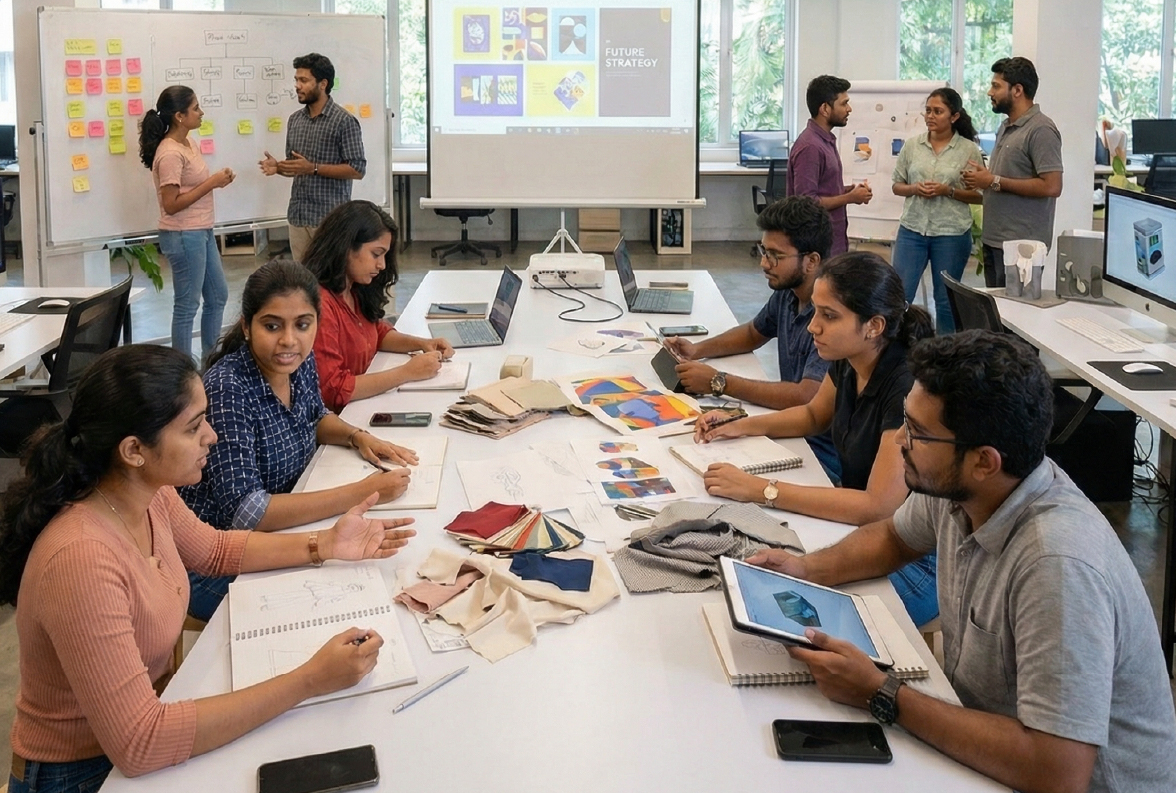
Under the Multidisciplinary Standard, students develop:
- Cross-disciplinary adaptability
- Industry-ready portfolios demonstrating thinking and execution
- Confidence within collaborative professional environments
- Technological fluency alongside Creative depth
- Commercial awareness and communication clarity
- Resilience within evolving Creative industries
Graduates are prepared for dynamic career pathways — not narrow job titles.
They are equipped to operate within complexity.
The Multidisciplinary Ecosystem
The Multidisciplinary Standard is not linear.
It functions as an ecosystem where Creativity, technology, business, and industry alignment continuously inform one another. At the centre lies the AMDT Multidisciplinary Standard.
Surrounding it are four interconnected pillars:
- Creative Foundation
- Technological Capability
- Commercial Intelligence
- Industry & Global Alignment
Each pillar connects to the others.
No capability develops in isolation.
This ecosystem approach ensures graduates develop depth, adaptability, and contextual awareness — not fragmented skill sets.
The Multidisciplinary Ecosystem integrates Creativity, technology, business, and industry alignment to develop industry-ready graduates equipped for Sri Lanka and global markets.
What This Means for Students
Under the Multidisciplinary Standard, students develop:
- Cross-disciplinary adaptability
- Industry-ready portfolios demonstrating thinking and execution
- Confidence within collaborative professional environments
- Technological fluency alongside Creative depth
- Commercial awareness and communication clarity
- Resilience within evolving Creative industries
Graduates are prepared for dynamic career pathways — not narrow job titles.
They are equipped to operate within complexity.

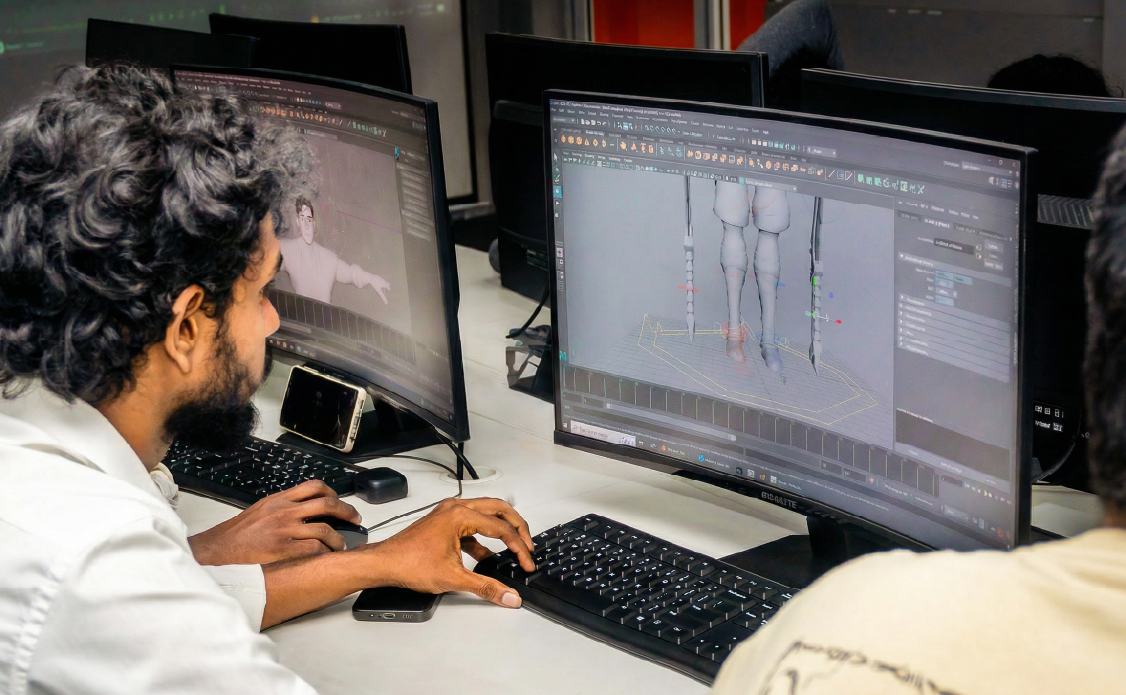
Beyond Traditional Creative Education
Traditional Model:
- Discipline-based silos
- Limited technological integration
- Minimal commercial literacy
- Theory-heavy structures disconnected from market context
The Multidisciplinary Standard:
- Integrated curriculum architecture
- Technology embedded within Creative practice
- Business awareness as a core capability
- Industry-aligned project frameworks
- Structured quality assurance and continuous enhancement
The difference is structural — not cosmetic.
Beyond Traditional Creative Education
Traditional Model:
- Discipline-based silos
- Limited technological integration
- Minimal commercial literacy
- Theory-heavy structures disconnected from market context
The Multidisciplinary Standard:
- Integrated curriculum architecture
- Technology embedded within Creative practice
- Business awareness as a core capability
- Industry-aligned project frameworks
- Structured quality assurance and continuous enhancement
The difference is structural — not cosmetic.
Institutional Structure & Quality Governance
Category leadership requires structure.
The Multidisciplinary Standard is supported by:
- Defined academic governance frameworks
- Continuous curriculum review cycles
- Industry consultation and engagement
- Clear assessment methodologies
- Quality assurance and enhancement systems
Creative freedom thrives when supported by disciplined systems.
Innovation requires institutional maturity.

Institutional Structure & Quality Governance
Category leadership requires structure.
The Multidisciplinary Standard is supported by:
- Defined academic governance frameworks
- Continuous curriculum review cycles
- Industry consultation and engagement
- Clear assessment methodologies
- Quality assurance and enhancement systems
Creative freedom thrives when supported by disciplined systems.
Innovation requires institutional maturity.
Built on Experience. Backed by Structure.
AMDT School of Creativity was established in 2005.
With over 20 years of contribution to Creative education and thousands of alumni across industries, the institution has evolved alongside the Creative economy.
The Multidisciplinary Standard is not experimental.
It is the result of sustained academic development, industry engagement, and continuous enhancement.
Institutional longevity allows innovation to be intentional — not reactive.

Built on Experience. Backed by Structure.
AMDT School of Creativity was established in 2005.
With over 20 years of contribution to Creative education and thousands of alumni across industries, the institution has evolved alongside the Creative economy.
The Multidisciplinary Standard is not experimental.
It is the result of sustained academic development, industry engagement, and continuous enhancement.
Institutional longevity allows innovation to be intentional — not reactive.
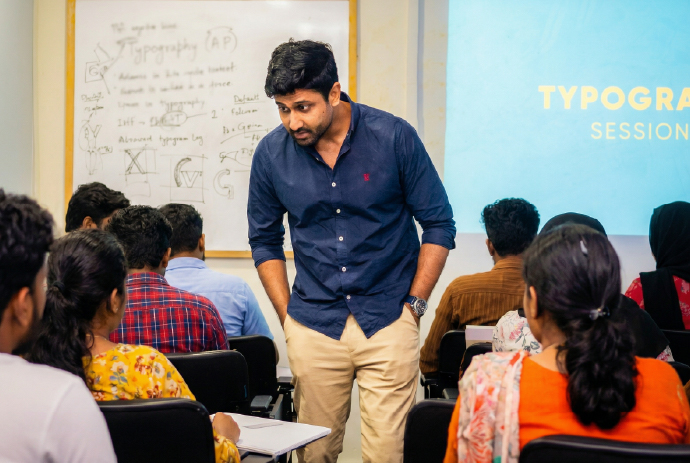
Contributing to the Regional Shift
Creative education across South Asia is undergoing transformation.
As industries integrate technology, digital systems, and commercial intelligence, education models must evolve accordingly.
The Multidisciplinary Standard contributes to this regional evolution by offering a structured framework that reflects how Creative industries now operate.
While rooted in Sri Lanka, its relevance extends beyond borders.
The shift toward multidisciplinary Creative education is not local.
It is regional.
It is global.
AMDT is committed to contributing to that transformation.
Contributing to the Regional Shift
Creative education across South Asia is undergoing transformation.
As industries integrate technology, digital systems, and commercial intelligence, education models must evolve accordingly.
The Multidisciplinary Standard contributes to this regional evolution by offering a structured framework that reflects how Creative industries now operate.
While rooted in Sri Lanka, its relevance extends beyond borders.
The shift toward multidisciplinary Creative education is not local.
It is regional.
It is global.
AMDT is committed to contributing to that transformation.
Our Declaration
AMDT School of Creativity is Sri Lanka’s ONLY multidisciplinary Creative institution where Creativity, technology, and business intersect to develop industry-ready, future-focused leaders who shape culture, business, and society.
This is not a temporary repositioning.
It is a structural commitment.
Every programme is designed under this framework.
Every module aligns with this philosophy.
Every project reinforces this integration.
The future of Creative education will not be built in silos.
It will be built at the intersection of Creativity, technology, and business.
In Sri Lanka, that standard already exists.

Our Declaration
AMDT School of Creativity is Sri Lanka’s ONLY multidisciplinary Creative institution where Creativity, technology, and business intersect to develop industry-ready, future-focused leaders who shape culture, business, and society.
This is not a temporary repositioning.
It is a structural commitment.
Every programme is designed under this framework.
Every module aligns with this philosophy.
Every project reinforces this integration.
The future of Creative education will not be built in silos.
It will be built at the intersection of Creativity, technology, and business.
In Sri Lanka, that standard already exists.