
Graphic Design vs Visual Communication
What’s the Difference? And Which Is Right for the Future?
If you’re researching graphic design courses, you may also come across the term visual communication. While closely related, they are not the same, and the difference matters more than ever in today’s Creative industries.
This page explains the difference clearly, so you can make the right long-term choice.
What Is Graphic Design?
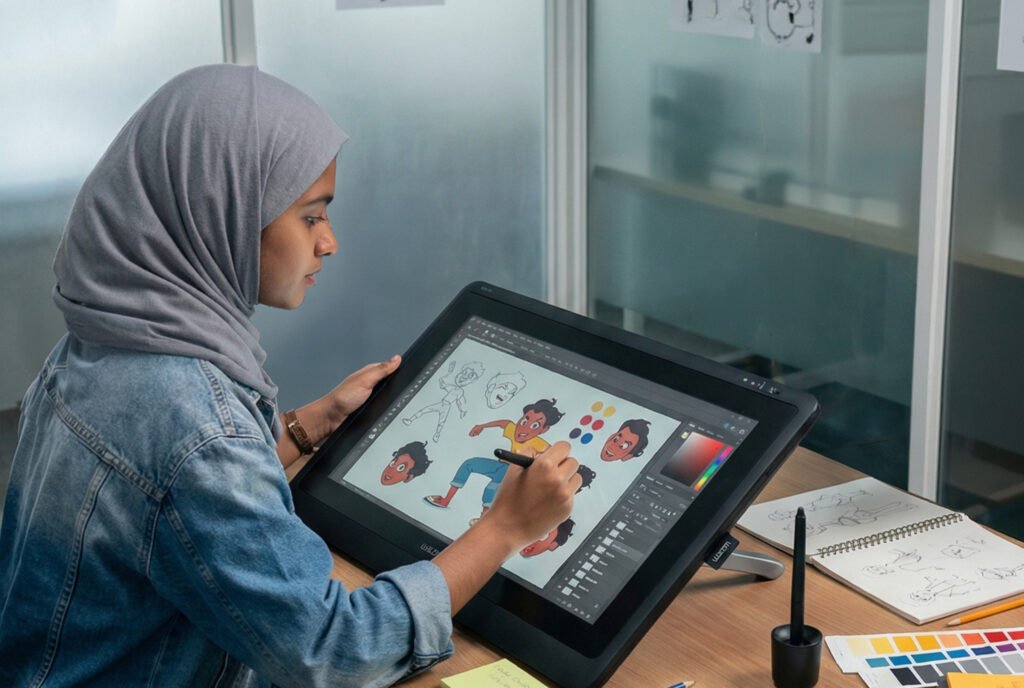
Graphic design traditionally focuses on the creation of visual outputs, such as:
Posters, brochures, and layouts.
Logos and brand visuals.
Advertisements and marketing materials.
Graphic design courses often emphasise:
Software skills.
Technical execution.
Defined design tasks and outputs.
These skills remain important, but on their own, they are no longer enough for the evolving Creative landscape.
What Is Visual Communication?
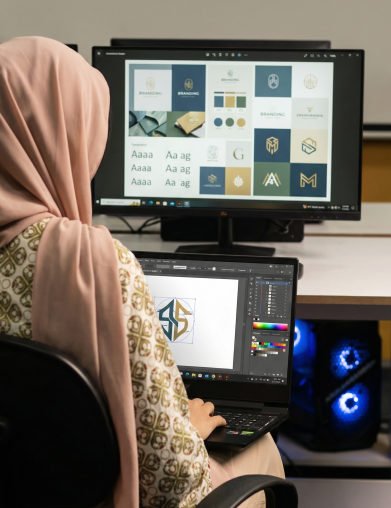
Visual communication goes beyond making things look good. It focuses on how ideas, messages, and meaning are communicated visually across audiences, platforms, and contexts.
Visual communication includes:
Graphic design fundamentals.
Visual language and meaning.
Concept development and Creative thinking.
Storytelling across print and digital media.
Understanding audiences, context, and purpose.
Working with emerging tools, including AI.
In short:
Graphic design is about execution. Visual communication is about thinking + execution.
Key Differences at a Glance
Graphic Design
- Focuses on visual output
- Software-led learning
- Often task-based
- Produces designers
- Narrower scope
Visual Communication
- Focuses on meaning and communication
- Concept- and process-led learning
- Project- and problem-based
- Develops visual thinkers
- Broader, future-ready scope
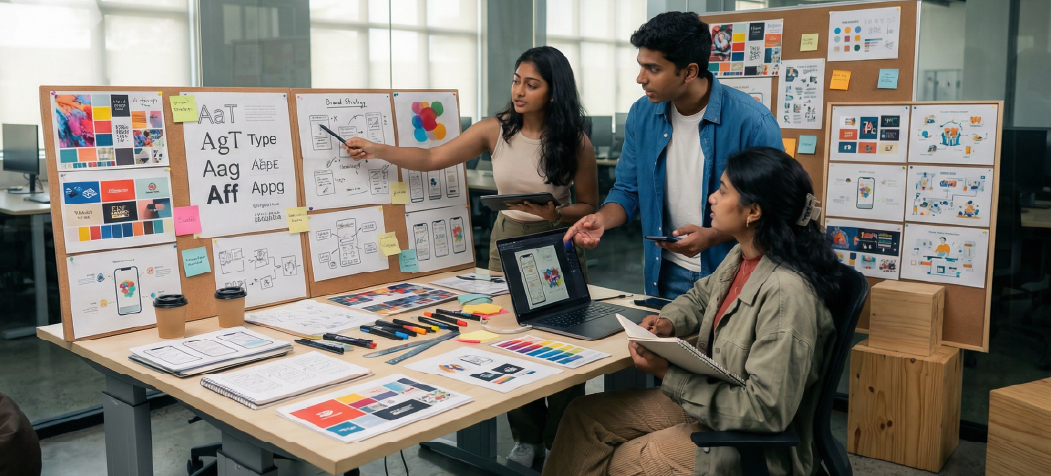
Why Visual Communication Is the Future
Today’s designers work across:
- Branding systems
- Digital platforms and content
- Social media and campaigns
- Interactive and screen-based experiences
- AI-assisted Creative workflows
Employers increasingly look for Creatives who can:
- Think independently
- Communicate ideas clearly
- Adapt to new tools and technologies
- Bring original perspectives, not just technical skill
This is why many institutions globally are shifting from graphic design to visual communication as a broader, more future-focused discipline.
Which Should You Choose?
Choose a graphic design course if you are mainly interested in:
- Learning software quickly
- Producing standard design outputs
- Short-term, tool-focused training
Choose visual communication
if you want to:
- Develop strong Creative thinking
- Understand why design works
- Explore your own Creative voice
- Work across multiple Creative contexts
- Prepare for long-term growth in Creative industries
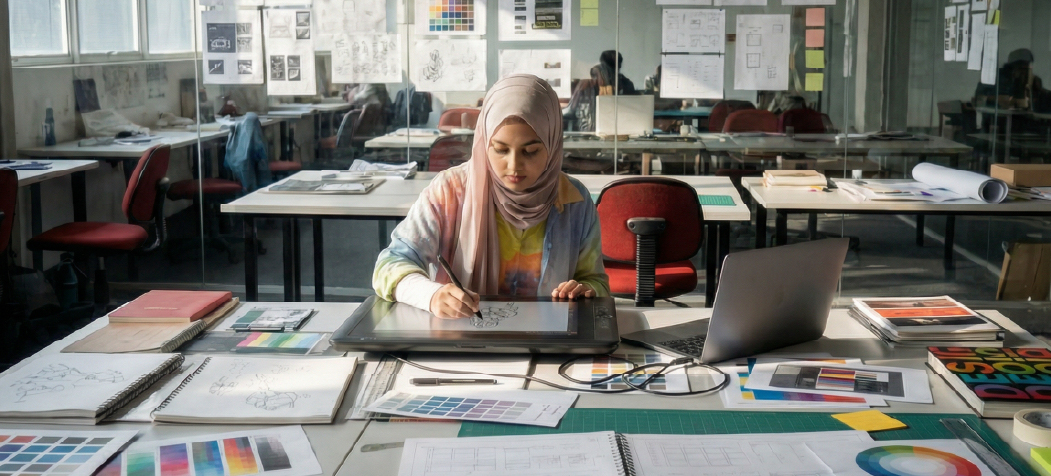
Visual Communication at AMDT
At AMDT School of Creativity, visual communication is taught as a disciplined Creative practice, not just a set of tools.
Students are developed through:
- Studio-based, project-driven learning
- Continuous critique and feedback
- Strong visual foundations
- Ethical and intelligent use of AI in the Creative process
- Progressive development of personal Creative voice
Graphic design skills are taught, but within a broader framework that prepares students for the future of design.
Ready to Go Beyond Graphic Design?
If you’re considering a graphic design course, visual communication offers a more complete and future-ready pathway.
Explore the Advanced Diploma in Visual Communication