


Foundation Diploma in Multidisciplinary Creative Practice
Interior Architecture
& Spatial Design
Explore space. Design experiences. Build your Creative portfolio.
Foundation Diploma in Multidisciplinary Creative Practice
Interior Architecture
& Spatial Design
Explore space. Design experiences. Build your Creative portfolio.
Interior and spatial design is not only about decorating rooms. It is about understanding how people move, feel, live, work and interact within spaces.
The Foundation Diploma in Multidisciplinary Creative Practice: Interior Architecture & Spatial Design is an 8-month Creative foundation programme for students who want to explore interior design, spatial thinking, materials, form, atmosphere and human experience before progressing into undergraduate-level study.
This specialization is part of AMDT’s Foundation Diploma in Multidisciplinary Creative Practice, where students begin with broad Creative exploration and gradually develop a specialist portfolio direction in Interior Architecture & Spatial Design.
A key advantage of the Foundation Diploma route is that students have the opportunity to earn two qualifications through a single programme. Upon successful completion and meeting the relevant requirements, students may receive both the AMDT Foundation Diploma in Multidisciplinary Creative Practice and the Pearson BTEC Level 3 Foundation Diploma in Art, Design and Media Practice.
Interior and spatial design is not only about decorating rooms. It is about understanding how people move, feel, live, work and interact within spaces.
The Foundation Diploma in Multidisciplinary Creative Practice: Interior Architecture & Spatial Design is an 8-month Creative foundation programme for students who want to explore interior design, spatial thinking, materials, form, atmosphere and human experience before progressing into undergraduate-level study.
This specialization is part of AMDT’s Foundation Diploma in Multidisciplinary Creative Practice, where students begin with broad Creative exploration and gradually develop a specialist portfolio direction in Interior Architecture & Spatial Design.
A key advantage of the Foundation Diploma route is that students have the opportunity to earn two qualifications through a single programme. Upon successful completion and meeting the relevant requirements, students may receive both the AMDT Foundation Diploma in Multidisciplinary Creative Practice and the Pearson BTEC Level 3 Foundation Diploma in Art, Design and Media Practice.
A foundation route into
interior and spatial design
interior and spatial design
This Foundation Diploma specialization is designed for students who are interested in how spaces are imagined, designed and experienced.
Students explore the relationship between people, space, materials, function, atmosphere, visual communication and Creative problem-solving. The course helps students develop the confidence, portfolio and foundational Creative skills needed to progress towards undergraduate-level study in interior architecture, spatial design, interior design or related Creative disciplines.
Students do not need to enter with a fully developed portfolio or advanced technical skills. The course is designed to help them explore, experiment, build confidence and develop a clearer Creative direction.

A foundation route into interior and spatial design
This Foundation Diploma specialization is designed for students who are interested in how spaces are imagined, designed and experienced.
Students explore the relationship between people, space, materials, function, atmosphere, visual communication and Creative problem-solving. The course helps students develop the confidence, portfolio and foundational Creative skills needed to progress towards undergraduate-level study in interior architecture, spatial design, interior design or related Creative disciplines.
Students do not need to enter with a fully developed portfolio or advanced technical skills. The course is designed to help them explore, experiment, build confidence and develop a clearer Creative direction.

Who is this specialization for?
This specialization may be suitable for students who:
• Are interested in interiors, architecture, spaces, environments or spatial experiences
• Enjoy observing how people use spaces
• Like working with mood boards, materials, colour, texture, form and atmosphere
• Want to explore interior and spatial design before entering undergraduate-level study
• Need to build a Creative portfolio for future progression
• Do not yet meet direct Year 1 entry requirements
• Are unsure whether interior / spatial design is the right pathway and want a foundation route first
• Want the added value of earning both an AMDT qualification and a Pearson BTEC qualification through one programme
A fully developed portfolio is not required at entry. The course is designed to help students build one.
Who is this specialization for?
This specialization may be suitable for students who:
• Are interested in interiors, architecture, spaces, environments or spatial experiences
• Enjoy observing how people use spaces
• Like working with mood boards, materials, colour, texture, form and atmosphere
• Want to explore interior and spatial design before entering undergraduate-level study
• Need to build a Creative portfolio for future progression
• Do not yet meet direct Year 1 entry requirements
• Are unsure whether interior / spatial design is the right pathway and want a foundation route first
• Want the added value of earning both an AMDT qualification and a Pearson BTEC qualification through one programme
A fully developed portfolio is not required at entry. The course is designed to help students build one.

Why study this specialization?
Learn to think about space Creatively and meaningfully.
Explore spatial design before specializing further
Understand whether interior architecture and spatial design is the right future direction for you.
Build a Creative portfolio
Develop project work that can support progression into undergraduate-level interior / spatial design study.
Develop visual and spatial thinking
Learn how to think through drawings, models, materials, images and spatial concepts.
Understand people and spaces
Explore how users experience interiors, environments and designed spaces.
Earn two qualifications through one course
Successfully completing the Foundation Diploma route can lead to both an AMDT Foundation Diploma and a Pearson BTEC Level 3 Foundation Diploma, where applicable.
Open study abroad possibilities
The Pearson qualification and portfolio may support overseas applications, subject to receiving institution requirements.

What you will explore
This specialization introduces students to the foundations of interior architecture and spatial design through Creative, practical and portfolio-focused learning.
You may explore:
• Spatial thinking and human experience
• Interior design concepts
• Mood, atmosphere and storytelling in space
• Materials, textures, finishes and colour
• Basic form, scale and proportion
• Space planning and user needs
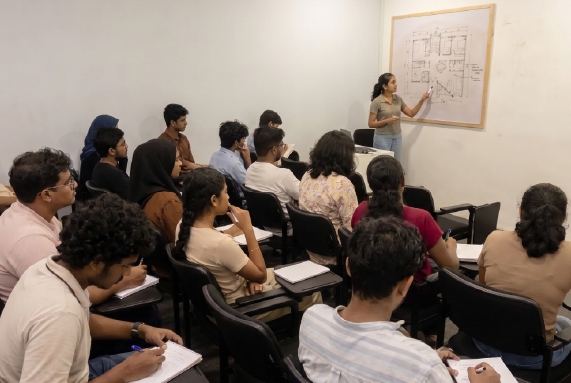
• Drawing and visual communication for interiors
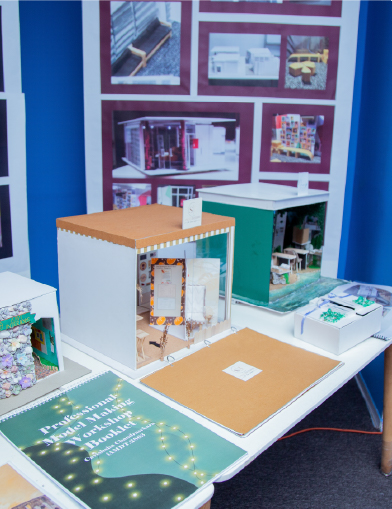
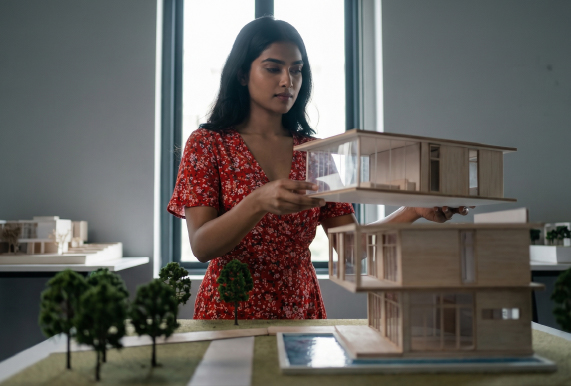
• Model-making and spatial experimentation
• Concept boards and material boards
• Photography and documentation of spaces
• Digital presentation for design ideas
• Portfolio development for progression
The focus is not only on creating attractive spaces, but on understanding how spaces communicate, function and affect people.
What you will explore
This specialization introduces students to the foundations of interior architecture and spatial design through Creative, practical and portfolio-focused learning.
You may explore:
• Spatial thinking and human experience
• Interior design concepts
• Mood, atmosphere and storytelling in space
• Materials, textures, finishes and colour
• Basic form, scale and proportion
• Space planning and user needs
• Drawing and visual communication for interiors
• Model-making and spatial experimentation
• Concept boards and material boards
• Photography and documentation of spaces
• Digital presentation for design ideas
• Portfolio development for progression
The focus is not only on creating attractive spaces, but on understanding how spaces communicate, function and affect people.
What you will build
During the course, students develop a body of Creative work connected to interior and spatial design.
Your portfolio may include:
• Visual journals and sketchbooks
• Spatial research and observation studies
• Mood boards and concept boards
• Material and texture studies
• Colour and atmosphere explorations
• Drawings, diagrams and visual notes
• Simple spatial models and mock-ups
• Space planning exercises
• Photography and documentation of environments
• Digital presentation boards
• Reflective writing and project evaluation
• A specialist portfolio connected to interior / spatial design progression
The aim is to help students complete the course with a clearer Creative direction and a portfolio that shows their ability to observe, think, experiment, design and communicate spatial ideas.

What you will build
During the course, students develop a body of Creative work connected to interior and spatial design.
Your portfolio may include:
• Visual journals and sketchbooks
• Spatial research and observation studies
• Mood boards and concept boards
• Material and texture studies
• Colour and atmosphere explorations
• Drawings, diagrams and visual notes
• Simple spatial models and mock-ups
• Space planning exercises
• Photography and documentation of environments
• Digital presentation boards
• Reflective writing and project evaluation
• A specialist portfolio connected to interior / spatial design progression
The aim is to help students complete the course with a clearer Creative direction and a portfolio that shows their ability to observe, think, experiment, design and communicate spatial ideas.
Skills you will develop
Creative research
Observing spaces, users, materials, culture, context and spatial behaviour
Spatial thinking
Understanding form, scale, proportion, movement, function and experience.
Visual communication
Communicating ideas through drawings, images, boards, models and presentations.
Material awareness
Exploring texture, colour, surface, finishes and atmosphere.
Experimentation
Testing spatial ideas through sketches, models, materials and digital tools.
Creative problem-solving
Responding to user needs, space limitations and design opportunities.
Portfolio development
Selecting and presenting interior / spatial design work for progression.
Self-management
Building confidence, discipline, time management and reflective practice.
Where this specialization can lead
Successful completion may support progression into Year 1 of a relevant AMDT undergraduate-level programme, subject to meeting AMDT’s academic progression requirements.

Possible future study and career directions include
• Interior Designer
• Interior Architect
• Spatial Designer
• Exhibition Designer
• Retail Space Designer
• Set / Production Designer
• Experience Designer
• Furniture / Object Designer
• Visual Merchandiser
• Design Consultant
• Space Planner
• Creative Director for spaces and environments
Students who complete the Foundation Diploma route also benefit from holding both an AMDT qualification and, where applicable, a Pearson BTEC qualification. This combination can strengthen progression opportunities by providing recognised evidence of Creative learning, portfolio development and academic achievement.
Where this specialization can lead
Successful completion may support progression into Year 1 of a relevant AMDT undergraduate-level programme, subject to meeting AMDT’s academic progression requirements.
Possible future study and career directions include
• Interior Designer
• Interior Architect
• Spatial Designer
• Exhibition Designer
• Retail Space Designer
• Set / Production Designer
• Experience Designer
• Furniture / Object Designer
• Visual Merchandiser
• Design Consultant
• Space Planner
• Creative Director for spaces and environments
Students who complete the Foundation Diploma route also benefit from holding both an AMDT qualification and, where applicable, a Pearson BTEC qualification. This combination can strengthen progression opportunities by providing recognised evidence of Creative learning, portfolio development and academic achievement.
Why this foundation route matters
Interior and spatial design can be a strong Creative pathway for students who enjoy spaces, environments, people, materials and visual problem-solving.
However, many students need time before committing to a full undergraduate pathway. This Foundation Diploma gives them a structured and guided first step.
Parents can expect a learning experience that is:
• Structured and guided
• Portfolio-focused
• Practical and Creative
• Progression-oriented
• Supported by academic and Creative feedback
• Connected to AMDT undergraduate-level pathways
• Designed to help students make a more informed decision before moving forward
• Enhanced by the opportunity to earn both an AMDT qualification and a Pearson BTEC qualification through a single programme
This is not a short-term hobby course. It is a serious foundation route for students preparing for Creative higher education.
Why this foundation route matters
Interior and spatial design can be a strong Creative pathway for students who enjoy spaces, environments, people, materials and visual problem-solving.
However, many students need time before committing to a full undergraduate pathway. This Foundation Diploma gives them a structured and guided first step.
Parents can expect a learning experience that is:
• Structured and guided
• Portfolio-focused
• Practical and Creative
• Progression-oriented
• Supported by academic and Creative feedback
• Connected to AMDT undergraduate-level pathways
• Designed to help students make a more informed decision before moving forward
• Enhanced by the opportunity to earn both an AMDT qualification and a Pearson BTEC qualification through a single programme
This is not a short-term hobby course. It is a serious foundation route for students preparing for Creative higher education.
Foundation Diploma vs Year 0
Same curriculum. Same classes. Different award outcome.
AMDT offers two routes through the same foundation learning experience: the Foundation Diploma and the Year 0 Programme.
Students in both routes follow the same curriculum, attend the same classes, complete the same learning activities, and develop the same portfolio and project work. The difference is the fee structure and the qualification outcome.
Route
Foundation Diploma
Year 0 Programme
Curriculum
Same curriculum
Same curriculum
Course Fee
Higher fee
Lower fee
AMDT Certification
Yes
No
BTEC Qualification
Yes (where applicable)
No
Main Purpose
Qualification Route
Bridging to AMDT Year 1
Study Abroad Support
Possible
Not applicable
Foundation Diploma vs Year 0
Same curriculum. Same classes. Different award outcome.
AMDT offers two routes through the same foundation learning experience: the Foundation Diploma and the Year 0 Programme.
Students in both routes follow the same curriculum, attend the same classes, complete the same learning activities, and develop the same portfolio and project work. The difference is the fee structure and the qualification outcome.
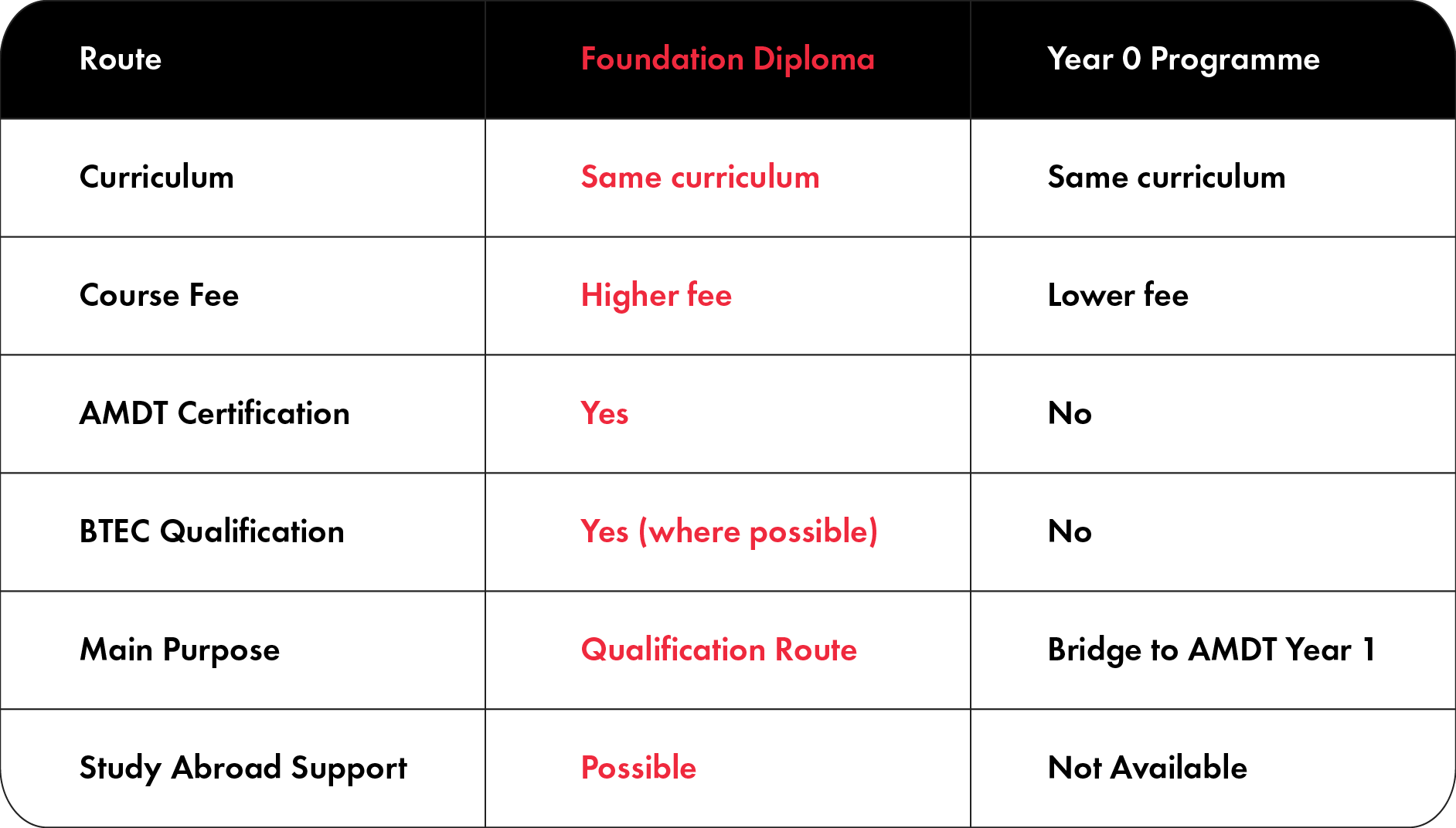
The Foundation Diploma route offers additional value through the opportunity to earn two recognised qualifications
from one programme, while Year 0 serves as a non-award bridging route.
Students looking for the lower-fee bridging route can explore the Year 0 in Multidisciplinary Creative Practice.
Awards and certification
Students enrolled in the Foundation Diploma route may receive:
AMDT Foundation Diploma in Multidisciplinary Creative Practice: Interior Architecture & Spatial Design
Pearson BTEC Level 3 Foundation Diploma in Art, Design and Media Practice
(where applicable and subject to successful registration and completion of Pearson requirements.)
Two qualifications. One learning journey.
One of the key benefits of the Foundation Diploma route is that students can work towards both qualifications through the same programme of study. This means students gain the recognition of an AMDT Foundation Diploma while also benefiting from the added credibility and international recognition associated with a Pearson BTEC qualification.
Year 0 students follow the same curriculum and classes but do not receive a qualification or certification upon completion.

AMDT is the best place for a free learning system. It taught me patience, open-mindedness, and how to use my imagination for Creative work. Feel free to be you
Warangana Premadasa
AMDT is the best place for a free learning system. It taught me patience, open-mindedness, and how to use my imagination for Creative work. Feel free to be you
Warangana Premadasa
Entry Requirements
We accept students from a range of backgrounds. If you are not sure whether you qualify, the AMDT Admissions Team can guide you.
This programme is especially suitable for students who want to prepare for undergraduate-level Creative study but do not yet meet direct Year 1 entry requirements.
Applicants should show interest in Creative education and a willingness to explore, experiment and develop a portfolio.
A fully developed portfolio is not required at entry. However, AMDT may ask applicants to attend an interview or share samples of Creative interest as part of the admissions process.
Course Fee Information
AMDT offers course fee options for both the Foundation Diploma route.
Foundation Diploma Route
Fee Item
Amount
Application Processing Fee
LKR 10,000
Enrolment Fee
LKR 20,000
Tuition Fee
LKR 420,000
Monthly Instalment Option
LKR 52,500 × 8 months
Qualification / Certification
Opportunity to earn both the AMDT Foundation Diploma and Pearson BTEC Foundation Diploma
Pearson BTEC Registration Fee
Approx GBP 191
Early Bird Discount
Students who register before 10 July 2026 may be eligible for an Early Bird Discount
of LKR 40,000 subject to AMDT’s terms and conditions.
For full fee details, payment options and Pearson registration information, please speak
to the AMDT Admissions Team.
Please note: All fees, discounts, payment plans and registration charges are subject to
change without prior notice. Terms and conditions apply.
Entry Requirements
We accept students from a range of backgrounds. If you are not sure whether you qualify, the AMDT Admissions Team can guide you.
This programme is especially suitable for students who want to prepare for undergraduate-level Creative study but do not yet meet direct Year 1 entry requirements.
Applicants should show interest in Creative education, storytelling, media, film, video, digital content or related Creative areas, along with a willingness to explore, experiment and develop a portfolio.
A fully developed portfolio is not required at entry. However, AMDT may ask applicants to attend an interview or share samples of Creative interest as part of the admissions process.
Course Fee Information
AMDT offers course fee options for both the Foundation Diploma route.
Foundation Diploma Route
Application Processing Fee LKR 10,000
Enrolment Fee LKR 20,000
Tuition Fee LKR 420,000
Monthly Instalment Option LKR 52,500 × 8 months
Qualification / Certification Opportunity to earn both the AMDT Foundation Diploma and Pearson BTEC Foundation Diploma
Pearson BTEC Registration Fee Approx GBP 191
Early Bird Discount
Students who register before 10 July 2026 may be eligible for an Early Bird Discount of LKR 40,000 subject to AMDT’s terms and conditions.
For full fee details, payment options and Pearson registration information, please speak to the AMDT Admissions Team.
Please note: All fees, discounts, payment plans and registration charges are subject to change without prior notice. Terms and conditions apply.
Frequently Asked Questions
Start your creative journey in Interior Architecture & Spatial Design
Explore spaces, materials, form and human experience while building a portfolio for undergraduate-level Creative study.
Through the Foundation Diploma in Multidisciplinary Creative Practice: Interior Architecture & Spatial Design, students can prepare for their next step while gaining the added value of working towards two recognised qualifications through one programme.
Start your creative journey in Interior Architecture & Spatial Design
Explore spaces, materials, form and human experience while building a portfolio for undergraduate-level Creative study.
Through the Foundation Diploma in Multidisciplinary Creative Practice: Interior Architecture & Spatial Design, students can prepare for their next step while gaining the added value of working towards two recognised qualifications through one programme.
Get in touch
Speak to a course advisor to get more information and assistance about the career and course you wish to learn.
Get in touch
Speak to a course advisor to get more information and assistance about the career and course you wish to learn.