
Fashion Design & Creative Futures
Beyond Traditional Fashion Design Education.
Advanced Diploma in Fashion Design & Creative Futures
Beyond Traditional Fashion Design Education.
Beyond Traditional Fashion Design Education.
The Advanced Diploma in Fashion Design & Creative Futures at AMDT School of Creativity is a 240-credit, studio-led programme designed for the next generation of fashion thinkers, makers, and innovators. It moves beyond conventional garment training to develop conceptual depth, sustainable practice, digital fluency, and long-term creative independence.
This undergraduate programme goes beyond traditional fashion design courses. It develops how students think, design responsibly, and adapt continuously while providing structured academic progression aligned with international standards.
The Advanced Diploma in Fashion Design & Creative Futures at AMDT School of Creativity is a 240-credit, studio-led programme designed for the next generation of fashion thinkers, makers, and innovators. It moves beyond conventional garment training to develop conceptual depth, sustainable practice, digital fluency, and long-term creative independence.
This undergraduate programme goes beyond traditional fashion design courses. It develops how students think, design responsibly, and adapt continuously while providing structured academic progression aligned with international standards.
The Evolution of Fashion
Fashion is no longer defined solely by seasonal collections or traditional atelier craftsmanship.
The industry has evolved into a global, technology-driven ecosystem shaped by:
- Sustainability
- Digital design & AI-assisted workflows
- Circular production models
- New consumer behaviours
- Ethical sourcing and transparency
Today’s industry demands more than garment construction. It demands sustainable systems thinking, digital prototyping, and adaptive design. This programme reflects the evolution of fashion as a creative, strategic, and technologically integrated discipline.
For students comparing fashion courses, this programme offers a broader and more future-ready pathway.

The Evolution of Fashion
Fashion is no longer defined solely by seasonal collections or traditional atelier craftsmanship.
The industry has evolved into a global, technology-driven ecosystem shaped by:
- Sustainability
- Digital design & AI-assisted workflows
- Circular production models
- New consumer behaviours
- Ethical sourcing and transparency
Today’s industry demands more than garment construction. It demands sustainable systems thinking, digital prototyping, and adaptive design. This programme reflects the evolution of fashion as a creative, strategic, and technologically integrated discipline.
For students comparing fashion courses, this programme offers a broader and more future-ready pathway.
About the Programme
Fashion design is not merely the creation of garments. It is the structured transformation of ideas into wearable, cultural, and commercial statements.
This programme is built on:
- Studio-based exploration
- Project-driven learning
- Structured creative process
- Conceptual development before execution
- Sustainable and ethical design thinking
Students develop both conceptual clarity and technical capability, learning how to research, experiment, prototype, critique, and refine work through iterative cycles.
Traditional skills are embedded within broader creative thinking — ensuring students understand not only how to make, but why they design.
About the Programme
Fashion design is not merely the creation of garments. It is the structured transformation of ideas into wearable, cultural, and commercial statements.
This programme is built on:
- Studio-based exploration
- Project-driven learning
- Structured creative process
- Conceptual development before execution
- Sustainable and ethical design thinking
Students develop both conceptual clarity and technical capability, learning how to research, experiment, prototype, critique, and refine work through iterative cycles.
Traditional skills are embedded within broader creative thinking — ensuring students understand not only how to make, but why they design.
Fashion Design vs Traditional Fashion Courses
Traditional fashion courses often focus on:
- Software training
- Pattern drafting as isolated skill
- Garment execution tasks
- Trend replication
- Technical assessment
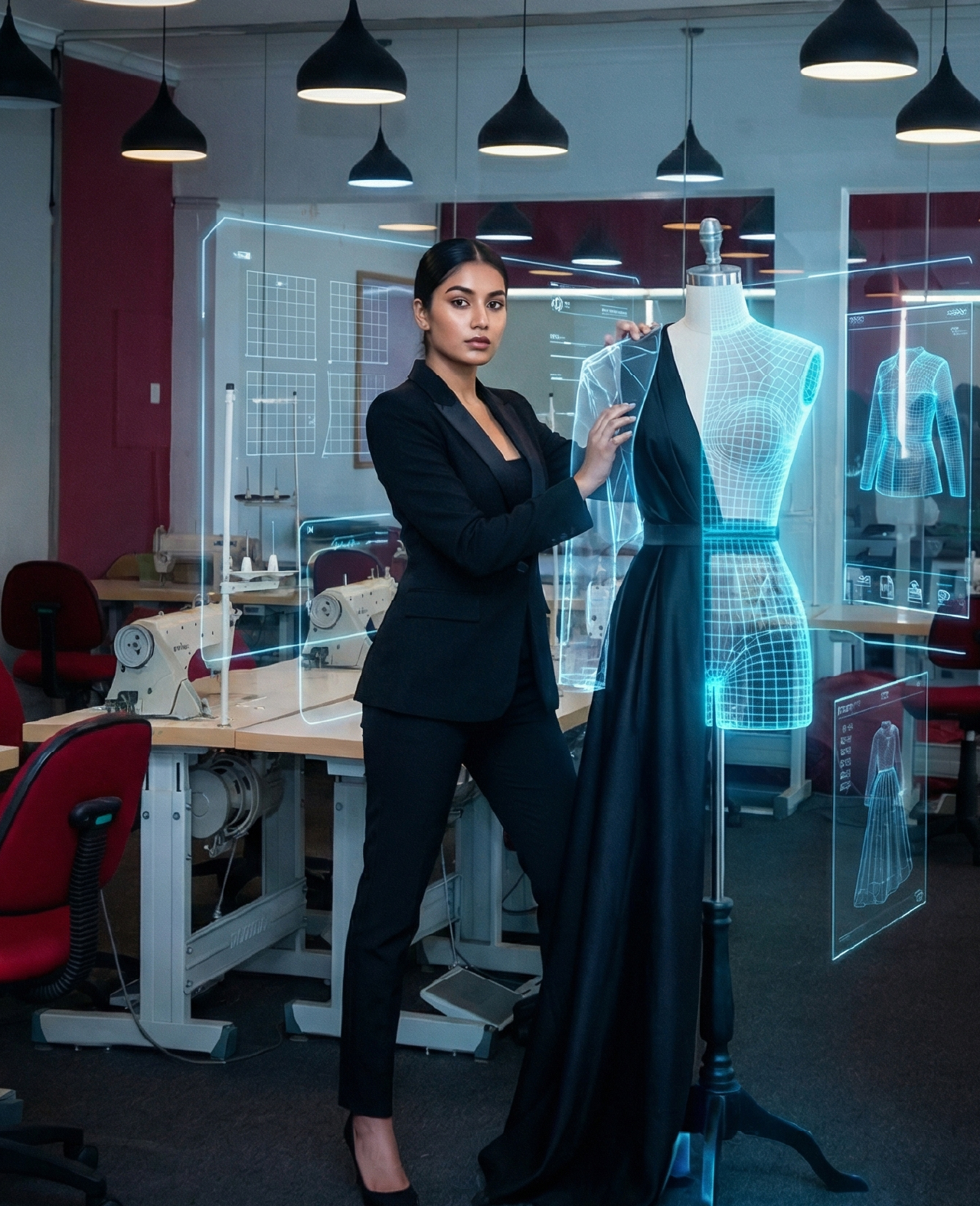
The Advanced Diploma in Fashion Design & Creative Futures is designed differently. This programme develops:
- Conceptual fashion thinking
- Creative voice and authorship
- Structured design process
- Sustainable and circular approaches
- Adaptability across physical and digital platforms
- Ethical and responsible AI integration
Graduates are prepared not only to execute design tasks, but to contribute meaningful ideas within evolving Creative industries.
Fashion Design vs Traditional Fashion Courses
Traditional fashion courses often focus on:
- Software training
- Pattern drafting as isolated skill
- Garment execution tasks
- Trend replication
- Technical assessment
The Advanced Diploma in Fashion Design & Creative Futures is designed differently.
This programme develops:
- Conceptual fashion thinking
- Creative voice and authorship
- Structured design process
- Sustainable and circular approaches
- Adaptability across physical and digital platforms
- Ethical and responsible AI integration
Graduates are prepared not only to execute design tasks, but to contribute meaningful ideas within evolving Creative industries.
What You Will Become
By the end of the programme, you will graduate as a:
- Concept-driven fashion designer
- Sustainable design practitioner
- Digital fashion innovator
- Fashion entrepreneur
- Textile and material explorer
- Creative director in development
Career Pathways
Graduates may work across:
Fashion houses, Independent labels, Digital fashion platforms, Textile innovation studios, Retail and brand strategy teams.
Many students progress to the final year (Top-Up) of a related BA (Hons) degree to completion.
What You Will Become
By the end of the programme, you will graduate as a:
- Concept-driven fashion designer
- Sustainable design practitioner
- Digital fashion innovator
- Fashion entrepreneur
- Textile and material explorer
- Creative director in development
Career Pathways
Graduates may work across:
Fashion houses, Independent labels, Digital fashion platforms, Textile innovation studios, Retail and brand strategy teams.
Many students progress to the final year (Top-Up) of a related BA (Hons) degree to completion.
Your Learning Outcomes
Upon successful completion, students will be able to:
Foundations in Fashion Design
- Apply structured design processes from research to final collection
- Translate cultural, social, and material research into design concepts
- Develop sustainable and responsible fashion strategies
Creative Thinking & Concept Development
- Generate original design narratives
- Analyse trends critically rather than replicate them
- Develop cohesive collections with conceptual integrity
Applied Professional Practice
- Produce garments and prototypes to professional standards
- Present collections through lookbooks, portfolios, and critiques
- Understand commercial, branding, and production contexts
AI & Emerging Technologies
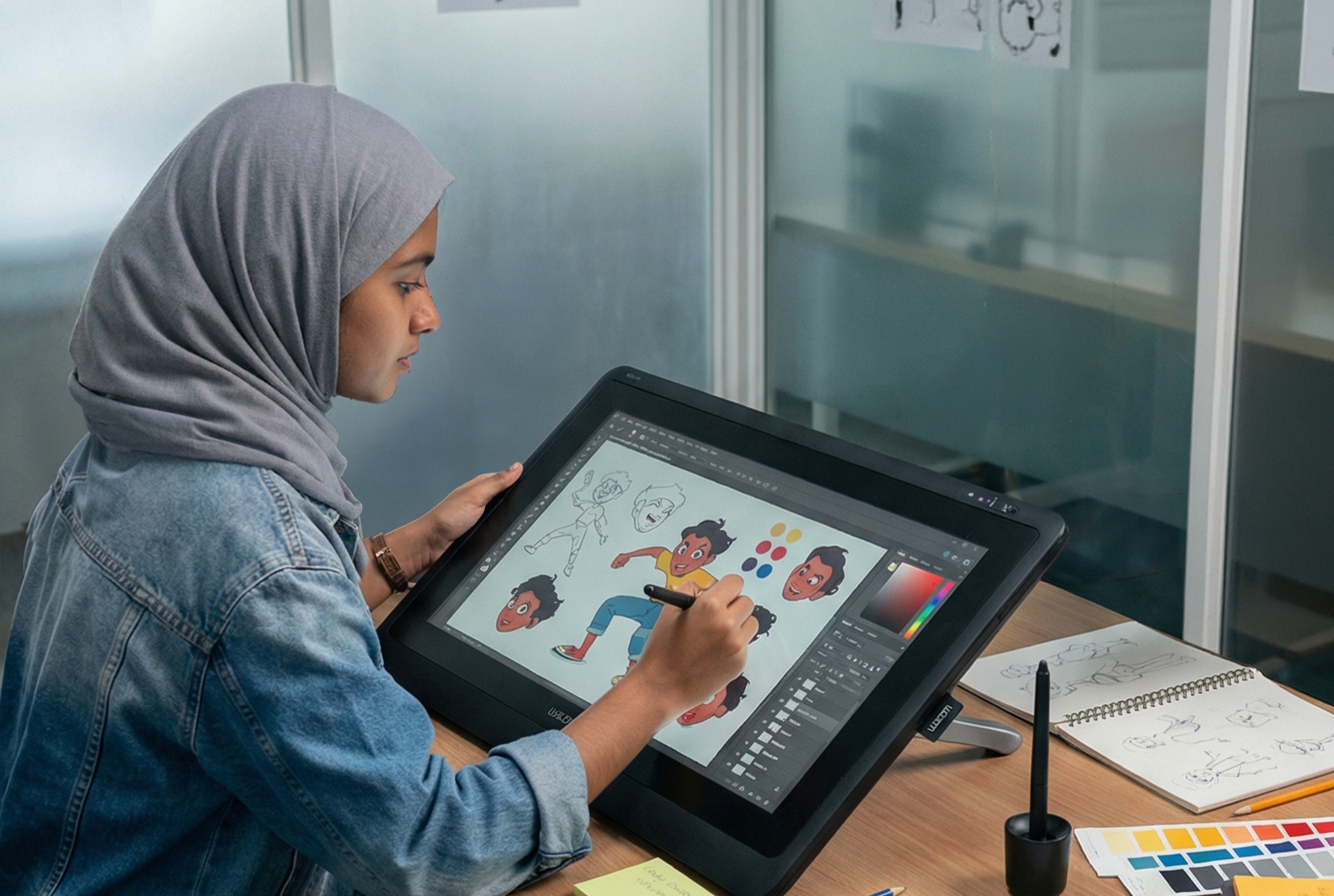
- Use digital tools for 3D prototyping and visualisation
- Integrate AI responsibly for research and forecasting
- Evaluate ethical implications of AI-assisted creative work
Creative Voice Development
- Define individual design identity
- Reflect critically on creative decisions
- Articulate design philosophy confidently
Portfolio & Progression Readiness
- Produce a professional fashion portfolio
- Prepare for Top-Up degree progression
- Position themselves for industry entry
Developing Your Creative Voice
Creativity is treated as a disciplined, reflective practice.
Students engage in:
- Structured experimentation
- Critical critique sessions
- Iterative refinement
- Guided reflection
- Personal identity exploration
Creative voice is not accidental — it is cultivated through process, feedback, and sustained inquiry.
In an industry shaped by rapid technological change, a strong creative voice becomes the designer’s long-term advantage.
How Learning Happens at AMDT School of Creativity
Learning is studio-based and project-driven.
Students experience:
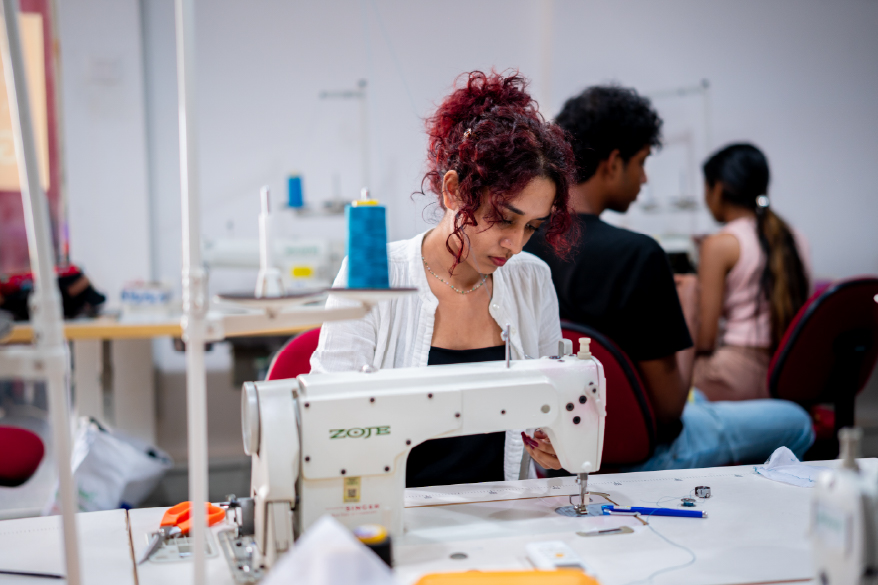
- Hands-on studio workshops
- Collection development projects
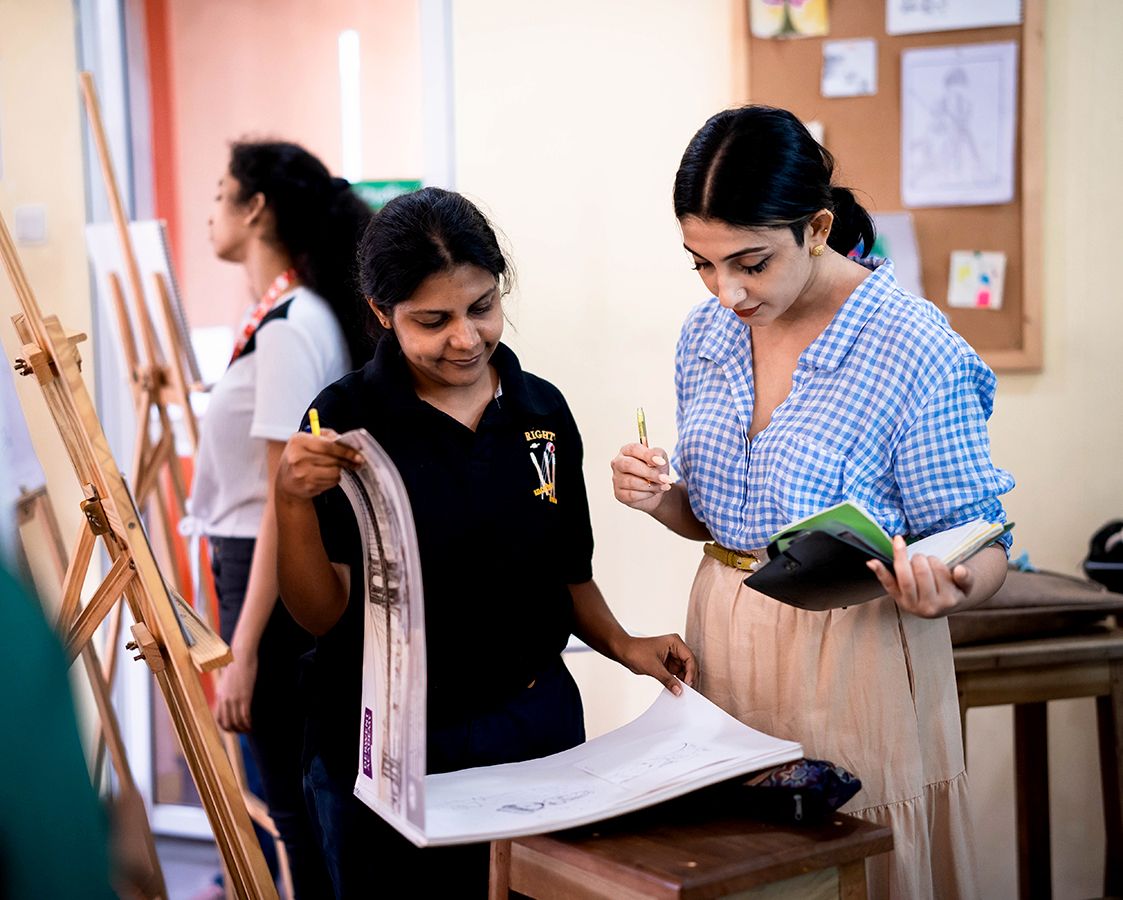
- Critique-led feedback sessions
- Iterative design refinement
- Industry-informed briefs
Assessment is based on:
- Design process
- Portfolio development
- Applied outcomes
- Reflective analysis
There are no memory-based examinations. Evaluation focuses on demonstrated capability and creative growth.
Developing Your Creative Voice
Creativity is treated as a disciplined, reflective practice.
Students engage in:
- Structured experimentation
- Critical critique sessions
- Iterative refinement
- Guided reflection
- Personal identity exploration
Creative voice is not accidental — it is cultivated through process, feedback, and sustained inquiry.
In an industry shaped by rapid technological change, a strong creative voice becomes the designer’s long-term advantage.
How Learning Happens at AMDT School of Creativity
Learning is studio-based and project-driven.
Students experience:
- Hands-on studio workshops
- Collection development projects
- Critique-led feedback sessions
- Iterative design refinement
- Industry-informed briefs
Assessment is based on:
- Design process
- Portfolio development
- Applied outcomes
- Reflective analysis
There are no memory-based examinations. Evaluation focuses on demonstrated capability and creative growth.
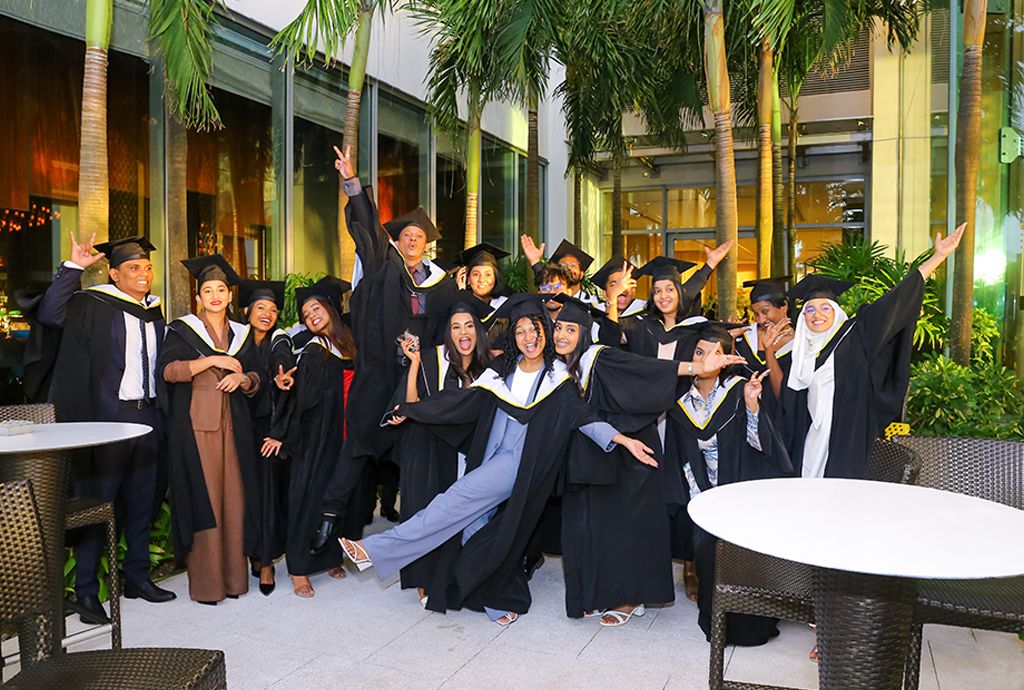
Dual Qualification Advantage
Students enrolled in the programme receive:
- The Advanced Diploma awarded by AMDT School of Creativity (240 credits)
- The Pearson BTEC Higher National Diploma (HND), a UK-regulated Level 5 qualification under the Regulated Qualifications Framework (RQF)
The AMDT School of Creativity qualification reflects the institution’s studio-based Creative education model.
The Pearson BTEC HND provides an internationally recognised academic framework and structured progression pathways.
Dual Qualification Advantage
Students enrolled in the programme receive:
- The Advanced Diploma awarded by AMDT School of Creativity (240 credits)
- The Pearson BTEC Higher National Diploma (HND), a UK-regulated Level 5 qualification under the Regulated Qualifications Framework (RQF)
The AMDT School of Creativity qualification reflects the institution’s studio-based Creative education model.
The Pearson BTEC HND provides an internationally recognised academic framework and structured progression pathways.

Academic Credit Framework & UK Alignment
Academic Credit Framework & UK Alignment
Our Advanced Diploma is structured as a 240-credit qualification, aligned to widely recognised UK higher education credit conventions:
120 credits = Diploma (Level 4 / HNC equivalent)
240 credits = Advanced Diploma (Level 5 / HND equivalent)
360 credits = Honours Bachelor’s Degree (Level 6)
Students who successfully complete the Advanced Diploma may progress to a related 120-credit final-year (Top-Up) honours degree, subject to the entry requirements of the degree-awarding institution.
This structure supports clear academic progression and international comparability within UK-aligned credit frameworks.
Academic Credit Framework & UK Alignment
Academic Credit Framework & UK Alignment
Our Advanced Diploma is structured as a 240-credit qualification, aligned to widely recognised UK higher education credit conventions:
120 credits = Diploma (Level 4 / HNC equivalent)
240 credits = Advanced Diploma (Level 5 / HND equivalent)
360 credits = Honours Bachelor’s Degree (Level 6)
Students who successfully complete the Advanced Diploma may progress to a related 120-credit final-year (Top-Up) honours degree, subject to the entry requirements of the degree-awarding institution.
This structure supports clear academic progression and international comparability within UK-aligned credit frameworks.
Quality Assurance, Monitoring & Continuous Enhancement
Academic quality at AMDT School of Creativity is structured, monitored, and continuously enhanced.
UK Academic Monitoring
Programmes aligned with the Pearson BTEC HND framework undergo annual external quality monitoring in accordance with UK academic standards, including:
+ Curriculum delivery review
+ Assessment verification processes
+ Internal quality assurance audits
+ Compliance with UK regulatory requirements
ISO-Aligned Institutional Standards
AMDT School of Creativity operates under management systems aligned with:
+ ISO 9001 – Quality Management Systems
+ ISO 21001 – Educational Organisations Management Systems
These frameworks ensure:
+ Transparent academic governance
+ Documented quality processes
+ Continuous improvement mechanisms
+ Student-centred institutional management
Internal Quality Enhancement
AMDT School of Creativity further maintains high standards through:
+ Academic boards and moderation panels
+ Student feedback review systems
+ Industry advisory consultation
+ Periodic curriculum evaluation and enhancement
This integrated quality system ensures that education remains creative in spirit, structured in delivery, and internationally benchmarked.

Quality Assurance, Monitoring & Continuous Enhancement
Academic quality at AMDT School of Creativity is structured, monitored, and continuously enhanced.
UK Academic Monitoring
Programmes aligned with the Pearson BTEC HND framework undergo annual external quality monitoring in accordance with UK academic standards, including:
+ Curriculum delivery review
+ Assessment verification processes
+ Internal quality assurance audits
+ Compliance with UK regulatory requirements
ISO-Aligned Institutional Standards
AMDT School of Creativity operates under management systems aligned with:
+ ISO 9001 – Quality Management Systems
+ ISO 21001 – Educational Organisations Management Systems
These frameworks ensure:
+ Transparent academic governance
+ Documented quality processes
+ Continuous improvement mechanisms
+ Student-centred institutional management
Internal Quality Enhancement
AMDT School of Creativity further maintains high standards through:
+ Academic boards and moderation panels
+ Student feedback review systems
+ Industry advisory consultation
+ Periodic curriculum evaluation and enhancement
This integrated quality system ensures that education remains creative in spirit, structured in delivery, and internationally benchmarked.
Entry requirements
To enrol in the Advanced Diploma in Visual Communication (Level 5 / HND equivalent), applicants are typically required to have:
Option 01
Successful completion of GCE A/Ls (Local or London) or an equivalent qualification.
Option 02
Completion of the AMDT School of Creativity Year 0 or Foundation Diploma qualification.
Option 03
Completion of a recognized Foundation Diploma or Level 3 qualification in any field.
Alternative Entry
Applicants without standard academic qualifications may be considered through structured alternative entry pathways, including:
+ Demonstrated Creative potential via portfolio
+ Relevant professional experience
+ Interview and academic review
All applications are reviewed in accordance with institutional quality assurance procedures.
Entry requirements
To enrol in the Advanced Diploma in Visual Communication (Level 5 / HND equivalent), applicants are typically required to have:
Option 01
Successful completion of GCE A/Ls (Local or London) or an equivalent qualification.
Option 02
Completion of the AMDT School of Creativity Year 0 or Foundation Diploma qualification.
Option 03
Completion of a recognized Foundation Diploma or Level 3 qualification in any field.
Alternative Entry
Applicants without standard academic qualifications may be considered through structured alternative entry pathways, including:
+ Demonstrated Creative potential via portfolio
+ Relevant professional experience
+ Interview and academic review
All applications are reviewed in accordance with institutional quality assurance procedures.
Frequently Asked Questions
Frequently Asked Questions
Start Your Creative Journey
Choosing a Creative programme is a long-term decision.
This Advanced Diploma provides:
+ Structured Creative development
+ International academic alignment
+ Development of a distinctive Creative voice
+ Clear progression to final year Honours degree pathway
Ongoing quality assurance and monitoring
Get in touch
Speak to a course advisor to get more information and assistance about the career and course you wish to learn.
Get in touch
Speak to a course advisor to get more information and assistance about the career and course you wish to learn.